Over the past year, we have followed two contrarian China trends. In recent weeks, both have been confirmed.
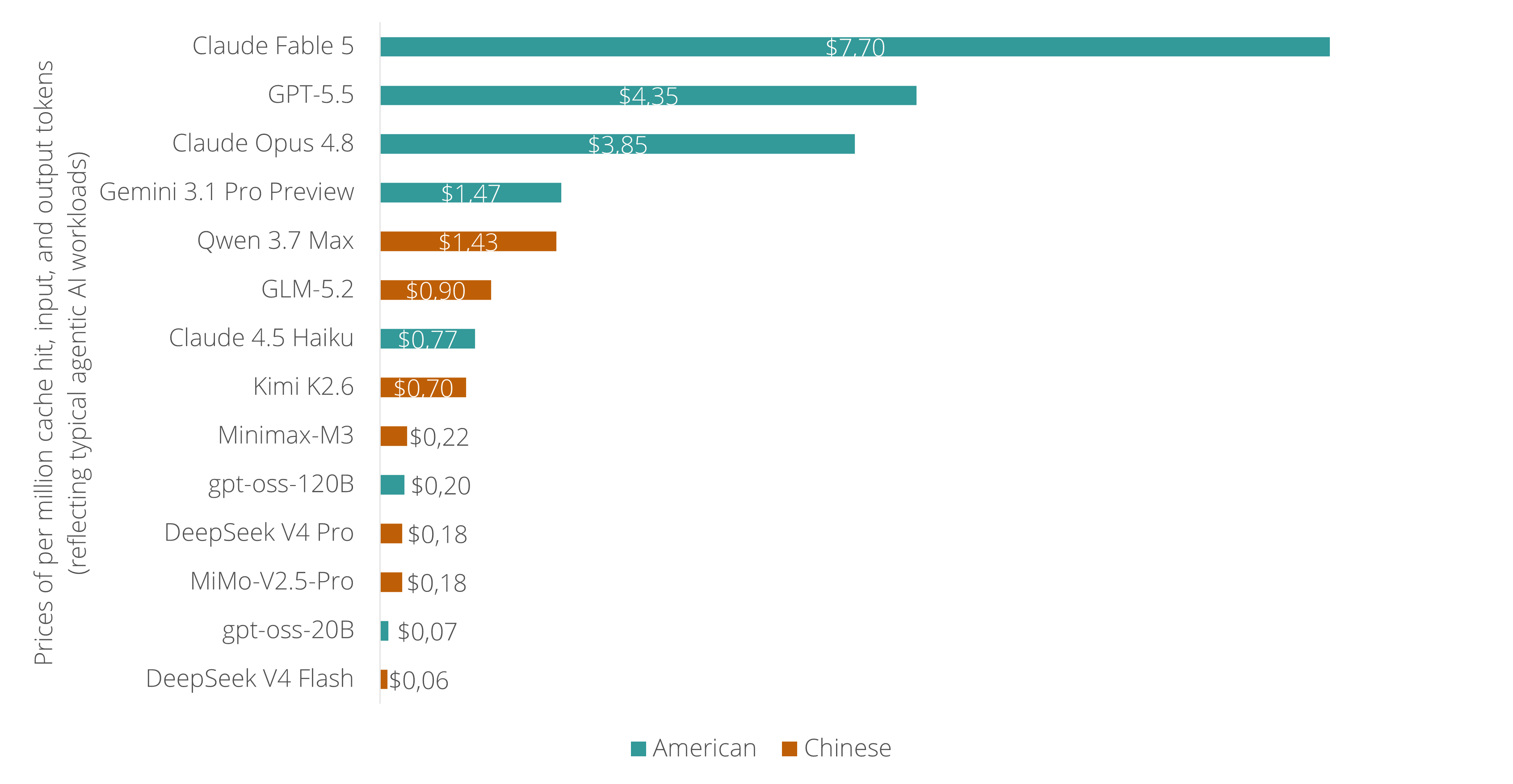
First: Chinese AI has reached the frontier at a fraction of the cost. We argued this in "In 2026, China Leads the United States in Both International Relations and Technological Innovation", "China Is Winning in Innovation Where It Counts: Markets, Not Just Research", and "China Has Closed the Gap With the United States in Artificial Intelligence". The evidence has now caught up: Apollo shows Chinese open-weight models trail the US frontier by just four months, while Moonshot's Kimi K3 recently outranked Anthropic's Opus 4.8 in blind testing. American developers are switching en masse to cheaper Chinese models like DeepSeek. This matters for investors because the AI boom is built on the assumption that US labs could charge premium prices and has driven significant US stock market gains in recent years.
Second: global opinion of China, in particular among young people, is improving, especially relative to the US. We wrote this in "China Already Has More Soft Power Than the Soviet Union Ever Did" and "A Majority of Singaporeans Now Prefer China to the US". This month, Pew confirmed it. Across 37 countries, 51% of the people have a favorable view of China, while 39% have an unfavorable view. Crucially, younger people in most countries have more favorable views of China than older people.

The conflict between Saudi Arabia and the UAE is showing new signs of escalating. If current trends continue, this could raise question marks around the $3 trillion managed by the sovereign wealth funds of both countries — much of which flows to western markets.
In January 2026, a month before the war between the US and Iran broke out, we warned that the conflict between Saudi Arabia and the UAE was likely to escalate during this year. As soon as the war began, we warned that it was likely to threaten the safe haven status of the Gulf states, as a significant amount of capital was likely to leave the region permanently. A few weeks later, we reaffirmed that the risk of a financial crisis in the Gulf was growing, as the UAE requested a currency swap line with the Fed. Next, the UAE took the extraordinary step of leaving the OPEC oil cartel, as it can afford a much lower oil price than OPEC leader Saudi Arabia. In recent weeks, new signs of stress have emerged, as Saudi Arabia has reportedly blocked financial flows to the UAE.
Looking ahead, a relevant analogy is the conflict between Qatar and Saudi Arabia (backed by the UAE), which led to a blockade of Qatar in 2017. It severely depressed foreign direct investment into the country for years — and a similar, but far larger, financial shock could follow if the conflict between Saudi Arabia and the UAE continues to escalate.

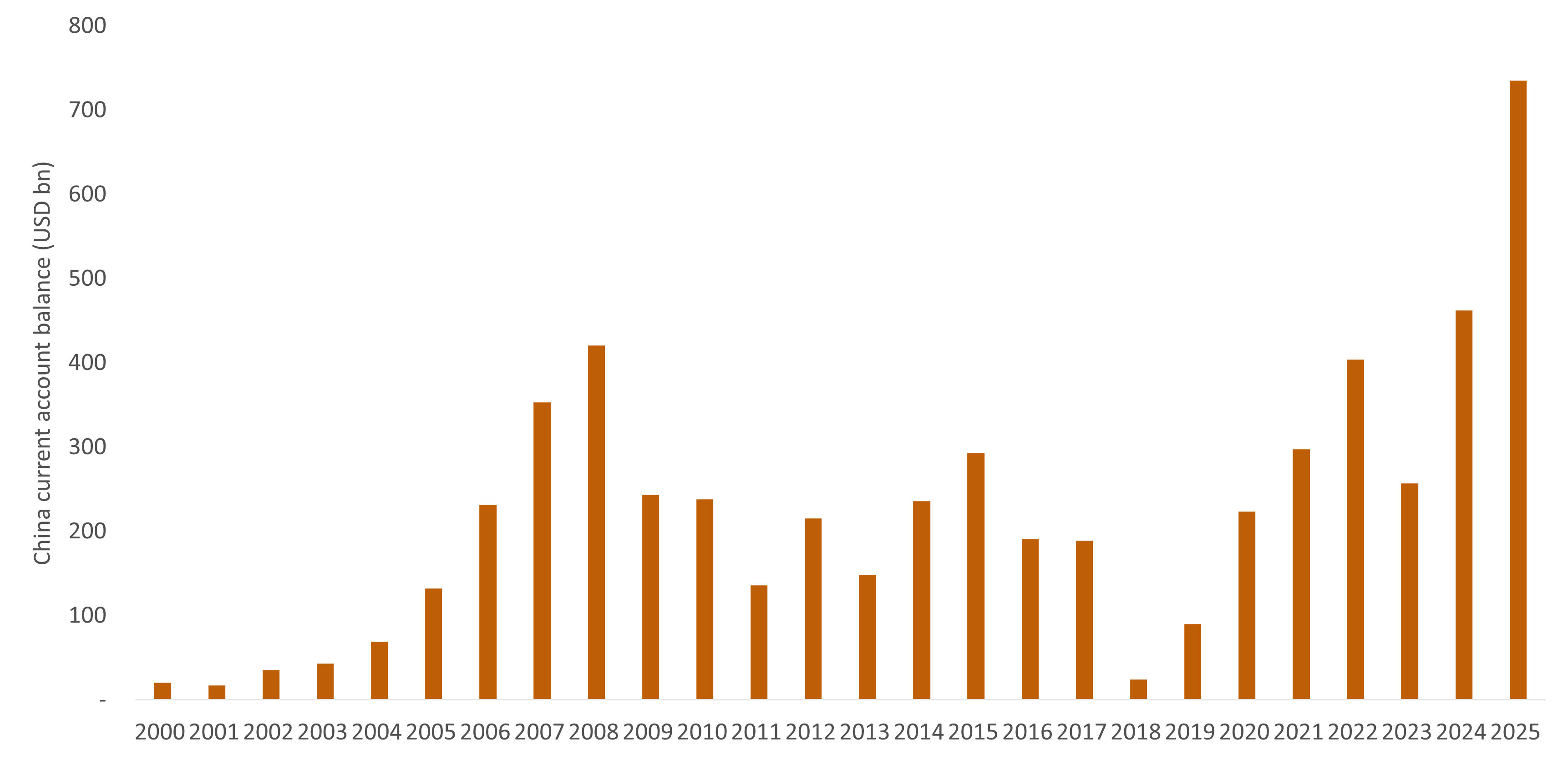
In 2025, China recorded the largest merchandise trade surplus in history – roughly $1.1 trillion more in exports than imports – based on Chinese manufacturers' global competitiveness. The alarm this has provoked in the United States and Europe over the fate of their own industries has dominated the debate. Far less attention has gone to another question: where is all this Chinese capital going? A trade surplus does not simply disappear. Every dollar China earns abroad and does not spend on imports must be reinvested abroad – the question is through which channel.
For two decades from the early 2000s, much of China's surplus was recycled into US Treasuries. But that has changed: Chinese capital no longer flows automatically to the US. The largest destination for China's capital in recent years has been Hong Kong – though much of it flows through the territory rather than settling there, using Hong Kong as a conduit to other foreign markets.
In the years ahead, more countries are likely to compete for access to Chinese capital rather than resist it. At the European level, this almost happened in December 2020 when the EU and China concluded the Comprehensive Agreement on Investment, which would have opened a return channel for Chinese surplus capital into Europe – including partnerships that would have shored up Europe's industrial competitiveness through a new energy system with lower energy costs. The deal was shelved at the last moment, but the logic that produced it has not gone away: Spain and Hungary are already building long-term national strategies that position Chinese capital as a funding engine for European reindustrialization, and others are likely to follow.