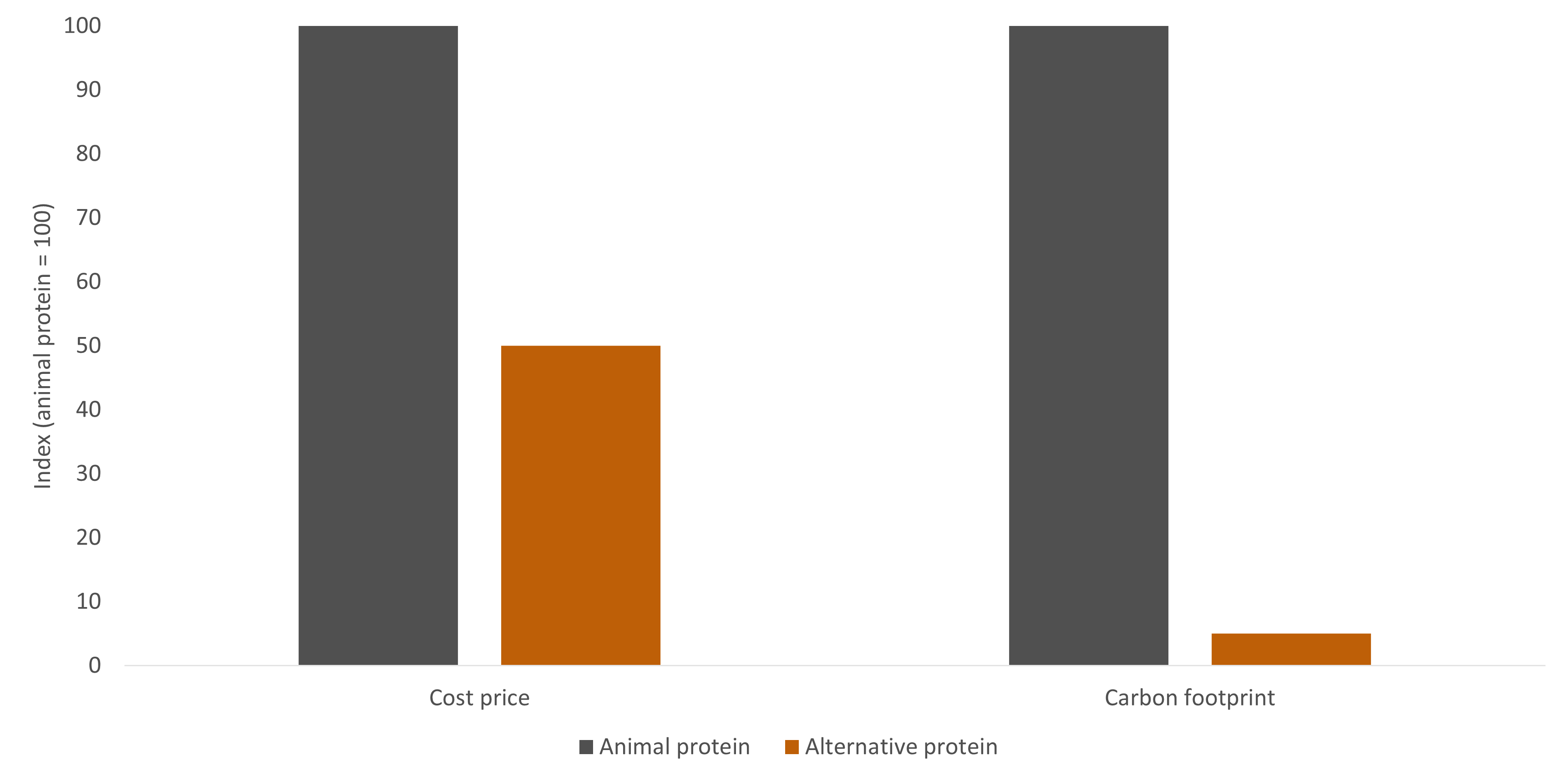
In the coming years, alternative protein (plant- and cell-based protein as a substitute for animal-based food) is likely to follow the same pattern as renewable energy technology over the past twenty years: driven by Chinese innovation, the cost falls so far that the case for transition shifts from a divisive moral ideal into a shared economic necessity.
Twenty years ago, the Chinese government made renewable energy technology a top priority for the first time in its 11th Five Year Plan (2006–2010). Today, China is the global leader in solar panels, batteries and electric vehicles. Over that period, several global crises that drove up the price of energy (the war in Ukraine, the war in the Middle East) turned renewable energy into a shared economic necessity: a more reliable energy supply at a lower cost. Something similar is now likely to happen in food, whose global prices are high and rising because of the war in the Middle East.
In its 15th Five Year Plan (2026–2030), the Chinese government has made alternative protein a top priority. China is already the world's largest funder of agricultural R&D, spending twice as much as the United States. The city of Shanghai has made the industrial scaling of alternative protein a key strategic objective. In November 2025, one Chinese company opened a factory the size of 75 football fields capable of producing alternative protein at 50% of the cost of animal-based protein - and with 95% lower carbon emissions.