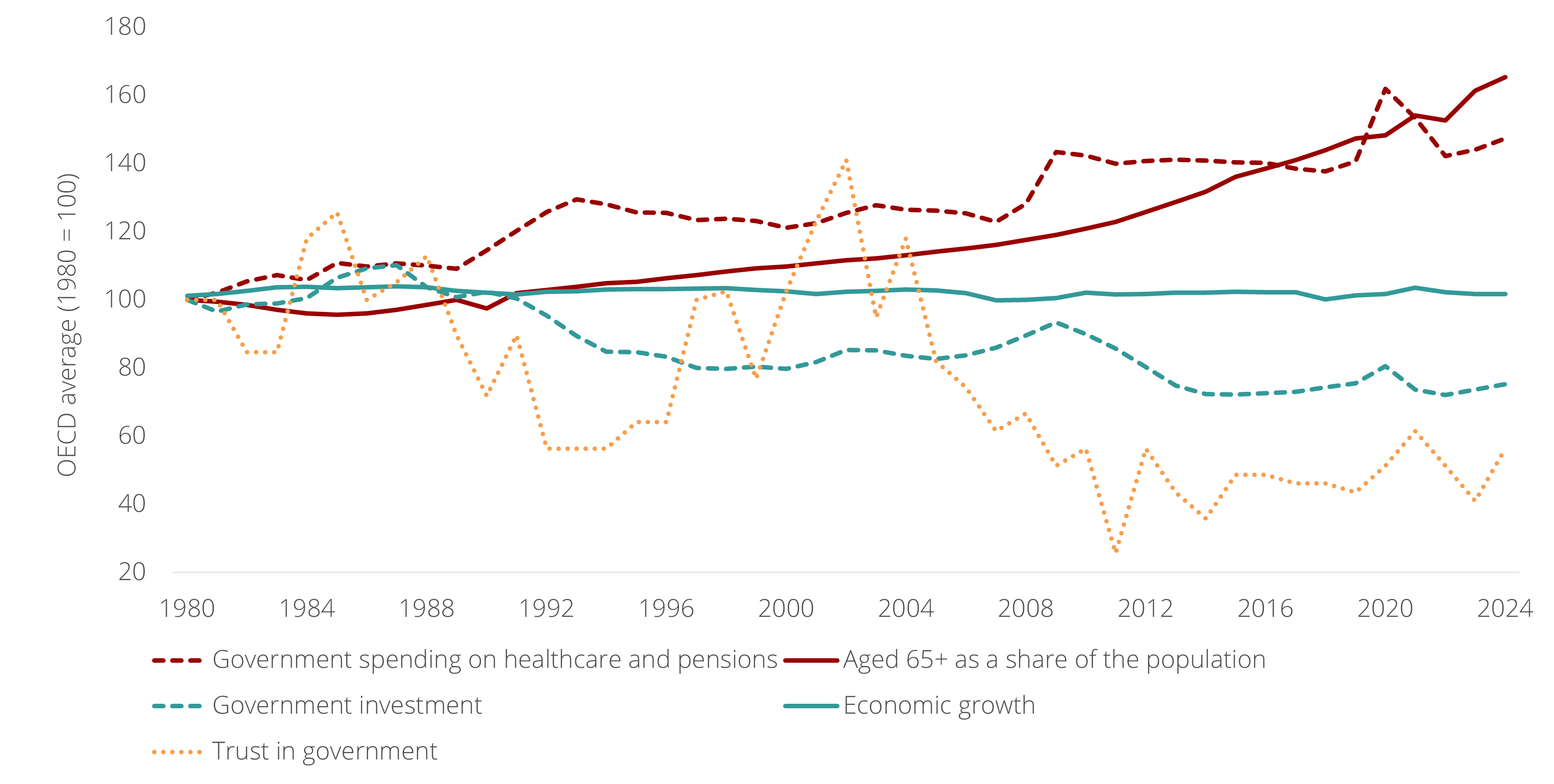
The extreme volatility in metals markets (in recent days, the price of silver has fallen by nearly 30%) reflects a deep structural problem in Western societies. In recent years, investors have increasingly allocated capital to gold and silver as hedges against the inflation of government-issued currencies – commonly referred to as the “debasement trade.” Behind this investment strategy lies the demographic reality of aging populations. Over the past 50 years, governments have steadily redirected spending toward healthcare and pensions for a growing elderly population, crowding out long-term investment and pushing down economic growth. This has led to record levels of government debt and a greater reliance on inflation as the means of reducing the burden of debt over time. This precarious economy of rising prices, particularly in basic needs such as housing and groceries, has produced a fragile political system defined by the rise of populism.
Because all of this is rooted in demographics, it is likely to persist. Recent policy shifts in the United States and Europe signal an attempt to confront this reality by cutting healthcare and pension commitments, but such measures do not address the underlying problem and are likely to intensify political unrest.
The deeper issue is that governments lack a strategy capable of offsetting the reality of aging populations. One possible exception is China. With a limited tax base to finance its own demographic decline, Beijing has been forced into a more radical response: restructuring its economy toward innovation, including in healthcare itself.