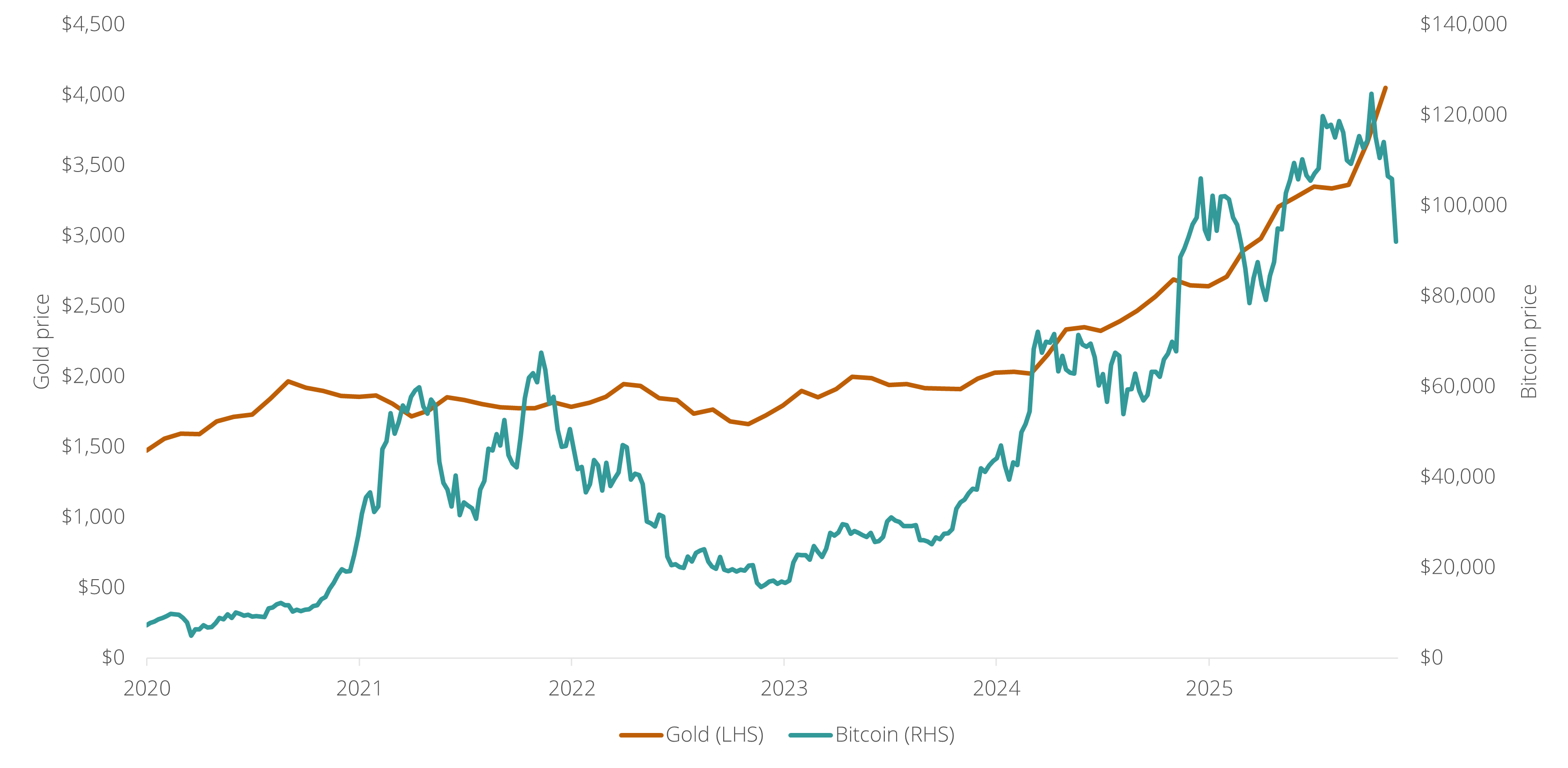
When Bitcoin launched in 2009, it was designed as a form of money that could not be devalued by governments through inflation – unlike dollars and euros that can be created by central banks. Gold has historically served a similar role as a hedge against the eroding value of government-backed currencies, which is why bitcoin enthusiasts have long called it "digital gold". Yet comparing the price development of gold and bitcoin shows a stark contrast: while gold's value is relatively stable, bitcoin has become an extremely volatile asset over the past 17 years, suggesting it does not function as originally intended. A new study indicates that bitcoin also plays a different role. For a growing number of people, cryptocurrency has become a lottery ticket to homeownership. The research shows that among homeowners, crypto ownership rises gradually with wealth, but among renters it is highest among those with the lowest wealth – pointing to a "gambling for redemption" motive: risk-taking as a last resort to become a homeowner.