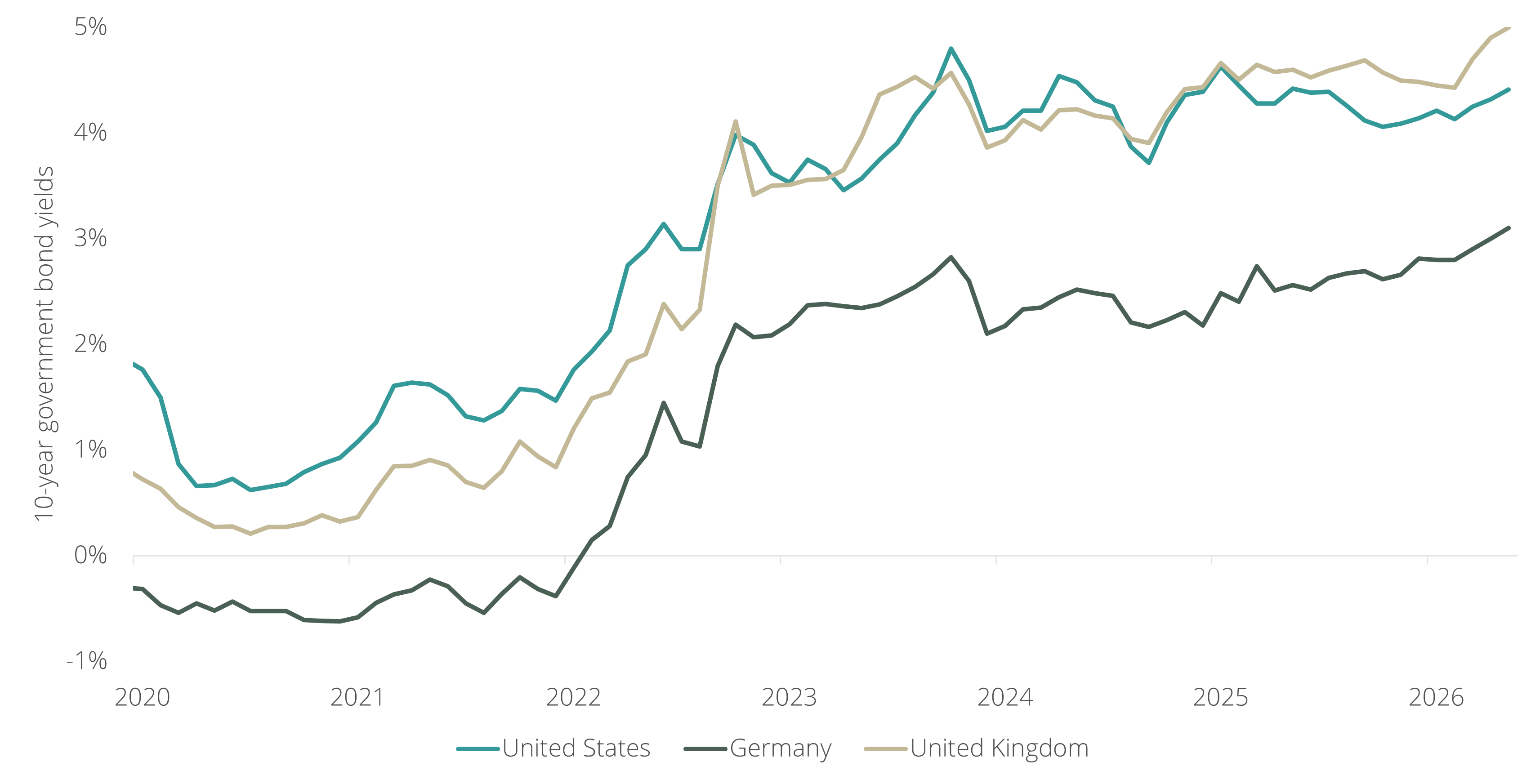
Since COVID, western societies have grown deeply dependent on government financial support during times of global crisis. The COVID response from 2020 onwards was unprecedented: the US launched the largest infrastructure investment packages in its history, while EU countries agreed for the first time to issue joint debt. The energy support packages that followed the war in Ukraine in 2022 were also significant, reaching up to 5% of GDP in some European countries. In 2026, however, as the economic impact of the war in Iran threatens to become severe, the capacity for a similar response is largely gone.
The main reason is the worsening state of government finances. Since COVID, the yields investors demand on government debt are substantially higher than six years ago. In simple terms, governments can no longer afford large-scale financial support without triggering a further rise in the yields on their debt. And rising yields, for countries already carrying high debt-to-GDP ratios, risk setting off a vicious cycle: higher borrowing costs force spending cuts, which slow growth, which worsens the debt burden, which pushes yields even higher - and so on.
A key implication is that western governments, without the ability to soften the blow of a global crisis, are losing control over the way economic pain will drive change. The early signs are already visible. In the US, the adoption of renewable energy is accelerating despite the Trump administration's efforts to protect fossil fuels, because businesses and households are discovering that renewable technology – including the Chinese-made products the administration has sought to block – offers greater price stability than oil and gas. In Europe, calls for a more stable relationship with China are growing for the same reason.