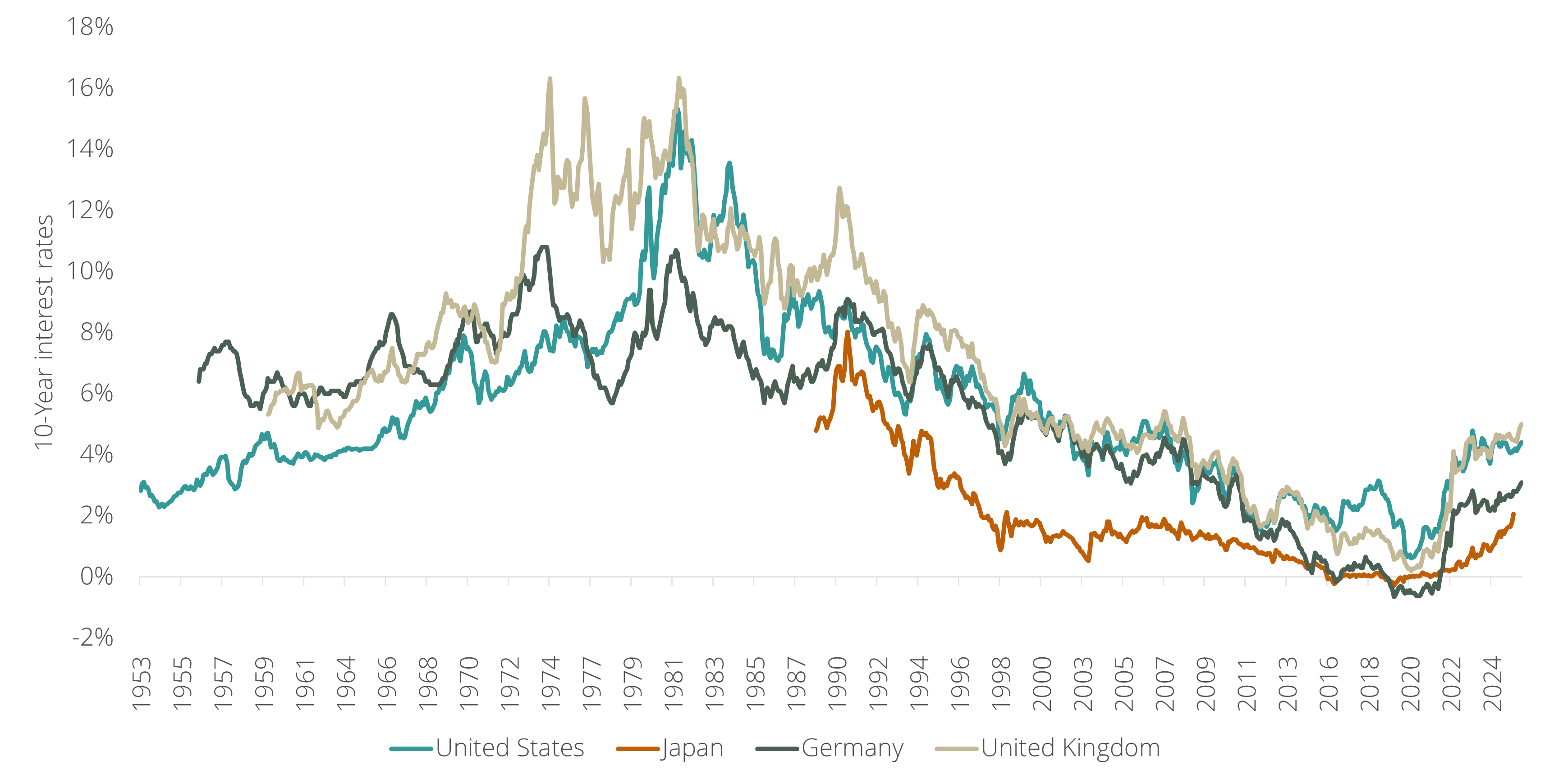
This week, Kevin Warsh begins his term as the US central bank's new chair. He was chosen by Trump for his belief in AI as a driver of lowering costs across the economy, which would open the possibility of cutting the short-term interest rate. However, there are several reasons why US interest rates – both short-term (set by the central bank, which raises them when inflation is too high) and long-term (set by the bond market, which raises them when inflation expectations are elevated or too much debt is being issued) – are likely to remain high and may go even higher.
First, there has been a global regime change in the past five years: interest rates have stopped declining for the first time in decades. There are several structural reasons for this – from massive government spending to international conflicts, all of which raise inflation and consequently interest rates – and such structural changes are unlikely to reverse without a clear cause, such as a meaningful reduction in debt or a resolution of major conflicts, neither of which seems likely anytime soon.
Second, the global shift towards higher interest rates is generating new mechanisms that reinforce the trend. Japan, for instance, may increasingly sell US assets to protect the value of its currency. If Japanese investors were to sell US government bonds at sufficient scale, it would add further upward pressure on US interest rates. A similar dynamic has emerged as a possibility from the troubled Gulf states – suggesting this is a structural feature of the new global economy, not something specific to Japan.
Third, the US economy has been running close to overheating for several years and still is, which calls for higher interest rates, not lower ones. US employment has been near maximum levels for 55 consecutive months, while the central bank has missed its inflation target for 63 months.
Fourth, while AI – Warsh's rationale for lowering interest rates – may create disinflation over the long term, its near-term effects have been more inflationary: demand for the metals, energy and chips needed to build data centers has driven up the costs of all three.