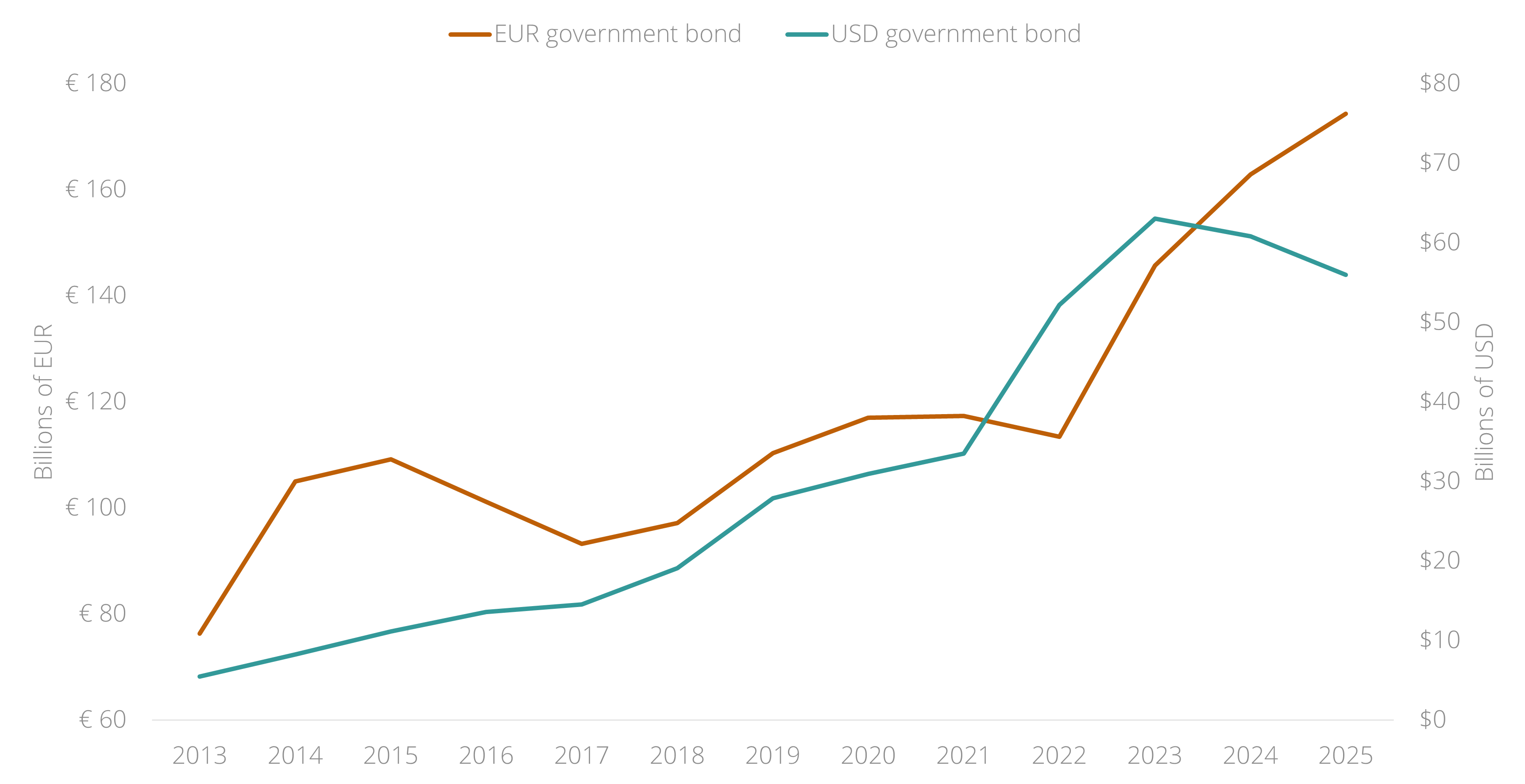
If we zoom out beyond the immediate crisis in the Strait of Hormuz, a larger pattern becomes visible that has been building for years: global capital is increasingly looking beyond the United States.
In the past few years, global investors have repeatedly confronted a question that once seemed unthinkable: whether US government bonds still deserve their status as the world's safest asset. It began in 2020–22, when pandemic-era government spending in the US pushed its budget deficit to a record high. The inflation that followed drove up interest rates and pushed down US government bond values – the assets that global investors relied on to protect their portfolios when other markets fall. In 2024–25, President Trump's attacks on central bank independence and his extreme import tariffs reinforced the same dynamic. In 2026, US military escalations against Iran, Venezuela and Greenland have brought some foreign investors to the point of considering shedding US assets altogether.
Two signals have emerged in 2026 that confirm this narrative.
The first comes from the Gulf. Against the background of Iranian officials stating that any institution buying US government bonds is financing the war, Gulf sovereign wealth funds, which hold trillions in US assets, have reportedly been in dialogue about cutting back their investment commitments to the United States, to bring capital back home.
The second comes from Europe. Since the Greenland crisis, more institutional investors are actively choosing European government bonds over American ones. This is not a rotation driven by the expectation of higher returns. It is a repricing of trust: a slow but accelerating loss of confidence in the reliability of the United States that has been building for many years.